A genuinely resilient organisation requires four shifts: redefining resilience through a human, neurophysiological lens; treating it as a measurable, developeable skillset; using diagnostics to assess and prioritise at scale; and anchoring it into everyday habits and culture at the individual, team, and organisational level.
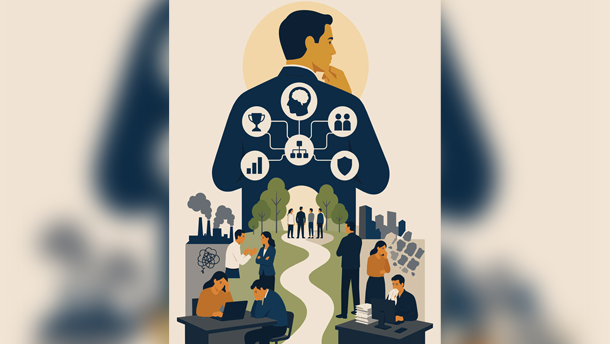
Leaders who build without examining the system they are building tend to discover its unintended properties at the worst possible moment. The more useful question to ask before that moment arrives is not, “Is our strategy right?” It is, “What is the system we have actually built, and are we able to see it clearly enough to lead it wisely?”
When under pressure, great leadership begins not with control, but with clarity, presence and human connection.
The middle is not vanishing. It is, in many ways, being invited to evolve. What is disappearing is not the layer itself, but the comfort of its old identity. A more demanding role is emerging—one that must make sense of change, enable people through it, and hold together the human fabric of organisations in an increasingly complex and competitive world.
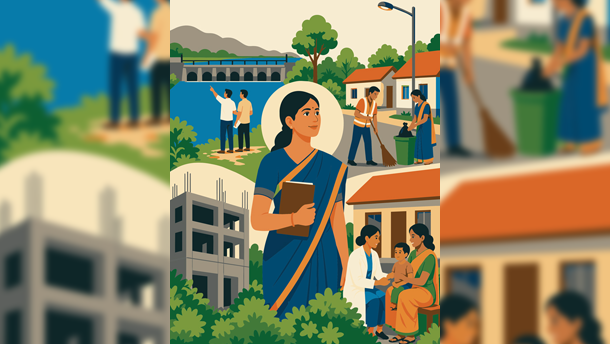
We owe this to the people of India. As I have mentioned earlier many times, ‘management’ should not be restricted to schools, universities, and the corporate world; it has to continuously touch the lives of people of the country and make them feel safer. IIMs run courses now about many societal subjects; so why shouldn’t management associations also pitch in with all these ‘nation building efforts?
Being an inclusive leader means being open-minded and reflective to explore our own fears. Yes, there will be lots of moments of discomfort, but we need to sit with them. Resist the temptation to brush it off or suppress it.
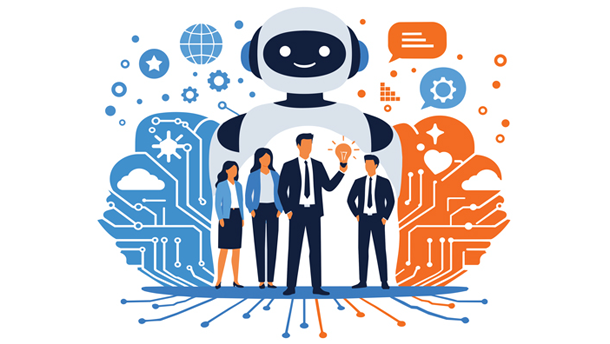
In a world racing towards automation, efficiency, and artificial intelligence, leadership is at risk of losing something vital: its humanity. We are surrounded by dashboards, frameworks, operating models, and algorithms promising certainty in uncertain times. Yet the most effective leaders today are those who lead unmistakably like humans.
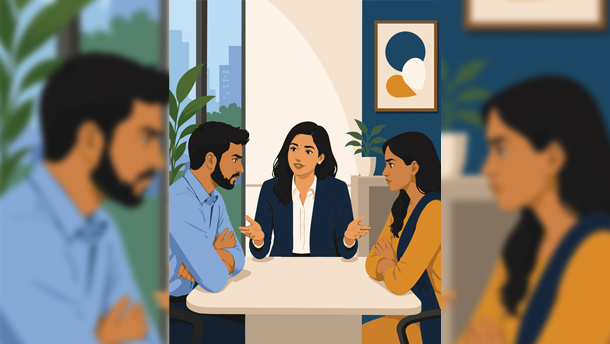
You do not lose authority because someone disagrees with you. You lose it when your behavior under pressure becomes inconsistent, reactive, or unclear. People watch how you respond when challenged. They decide in those moments whether you are someone who hides behind position or someone who leads the relationship as well as the task.
When leaders develop mindset, they build confidence. When they embrace awakening, they gain strategic clarity. When they practice gumption, they model courage. When they trust intuition, they move decisively. And when they embody charisma, they inspire culture.
Storytelling is not a performance; it is a way of thinking. The leaders who communicate best do not rely on charisma, they rely on structure. ‘Past’, ‘Present’, and ‘Future’ framework gives you just that.
In an era of constant disruption, the most effective boards are those that anticipate change rather than react to it.
If academia learns to treat connection as a discipline, not an afterthought, it can turn its most intangible quality—trust—into its greatest strength. The choice is clear: either humanise leadership now, or risk losing the humanity we claim to nurture.


.jpg)





 Member Login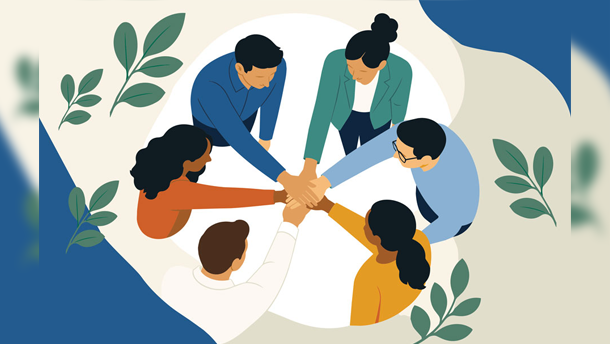





 Submit Enquiry